


Curiosity has been on my mind as of late, for a plethora of reasons. And really, it’s a hum that doesn’t stop. I’m so often insatiably curious to the point where it’s probably a little problematic.
Here’s an example from two days ago, while sitting on the couch enjoying my coffee:
Oh, look! A bumblebee! Where does he live? Who is his queen? Why is he so fluffy? Wait! Is that the local pronghorn herd on that hill over there? Why are they running? Are they running from something? Ah! They’re playing! They are playing SUPER hard! Like, the fastest I’ve seen pronghorn run. Were they training the babies for the hard migrations ahead? Was play simply built into the system of endurance work for these Pleistocene-era creatures?
This curious process is simply part of the recipe of me. But if I’m being honest, I’ve been experiencing a low yet intrusive level of anhedonia over the past year, and it’s been a strange reckoning to keep my curiosity alive and limber.
Luckily, I’ve had a reawakening.
How My Students Helped Me Reclaim My Curiosity
I spent the last six months filling an emergency gap as an English teacher at my local rural-adjacent high school. It was, quite honestly, the most fun, the most difficult, and the hardest work I’ve done for the most menial pay and the least amount of energy I’ve ever had at the end of the workday.
Much of the general public seems to want to speak ill of this coming generation, to which I say shame on anyone who thinks they know anything about them without spending ample time with them. They are children, if nothing else, and they reminded me that curiosity is integral to survival.
Over the course of our time together, I watched curiosity take root in unexpected ways. My eighth graders discovered a love for acting as they studied, performed, and rewrote scenes from Romeo and Juliet. My juniors wrote informational essays about what they loved, and in my little town that meant plenty of hunting and fishing—from just as many girls as boys. My constant doodlers dove into art history. One of my LGBTQ+ students researched Stonewall and was thrilled to learn what people had endured so he could be so casually and openly himself in high school.
I wanted to show them they could write about what they loved, discover where those passions came from, and enjoy the process, even if writing wasn’t their strength. Somehow, despite my lack of a teaching background, it worked. These kids were all in on discovery—asking questions, chasing answers, and digging deeper into what lit them up.
It certainly took a wee bit of prodding initially. Many of them said they had nothing to write about. I sat with these kids, and we talked it out until we found the thing that lit up their faces. I realized then that curiosity, though natural, can sometimes take time and intention to tease out. It took the right question to figure out the next question, and then we were off and running. I came to see curiosity as a result of this questioning process, rather than the usual stack of domino-like inquiries falling in my brain.
Living in the Questions
I have kept a magazine snippet I cut out of Oprah magazine (lol) when I was in high school. It’s a quote from Rainer Maria Rilke’s Letters to a Young Poet.
You are so young, so much before all beginning, and I would like to beg you, dear Sir, as well as I can, to have patience with everything unresolved in your heart and to try to love the questions themselves as if they were locked rooms or books written in a very foreign language. Don't search for the answers, which could not be given to you now, because you would not be able to live them. And the point is, to live everything. Live the questions now. Perhaps then, someday far in the future, you will gradually, without even noticing it, live your way into the answer.
I came back to Rilke’s poetry as an adult. (Widening Circles, I’m looking at you.)
I'm beginning to think curiosity is more like a muscle. It weakens when neglected and strengthens when exercised. And maybe the smallest exercise is simply asking and living in one more question than you did yesterday. If anything can break the performative certainty that is rampant in this online era, maybe it’s a one-more-question practice that helps us take the next step toward growth rather than conviction.
So, in honor of living in the questions, in gratitude for my ever-curious students, in the daily grind of beating back my haunting and strange anhedonia, in awe of the pronghorn running full tilt along the edge of sage and pine, here are 100 questions to help us, me, you reclaim a sense of curiosity, of wonder, of awe, and maybe even of laughter.
I don’t know if these questions will change the way you move through the world. I do hope they’ll help me change the way I move through mine. So take one with you. Into the woods. Into your backyard. Into whatever your classroom is.
You don’t have to answer them all. Just don’t stop asking. And please, add a few more and help me out.
100 Questions for Curious People to Carry Outside
On Paying Attention
Theme: Learning to notice what you’ve overlooked.
How would a toddler explore the area directly at my feet?
What is taking my attention from this place?
Do I know the plants here?
How has this place changed since the last time I was here?
How long can I be still without wanting to move?
Does moving more slowly change my experience?
What can I offer this particular patch of ground?
What is this particular patch of ground offering to me?
If I am quiet for a long time, what do I hear?
If I am loud intermittently, what happens?
On Storying A Place
Theme: How we can better understand and interpret landscape.
What stories are buried here?
Where does this waterway end up?
What is old or new here?
How does interdependence work in this ecosystem?
Who lives or lived here?
How do the seasons affect this area?
What does the weather change here?
Why is the land shaped in this way?
How did I receive access to this place?
On Wildlife
Theme: Learning to think like other creatures.
What is the biggest or smallest being that lives here?
Where are the animals at this exact time of day? Why?
Who might see me that I am not seeing?
What disruption am I causing to their day, and how could I change that?
What rare or endangered species inhabit this place?
Who is talking right now, and what are they saying?
What wild homes exist in this wild neighborhood?
Who else walks this trail?
What animals are below or above me?
Why are they all so cute, even when ugly?
On Plants
Theme: Paying attention to what is rooted.
What is so common that I am overlooking it?
Why are these plants here?
What is native/non-native/invasive/evolving about plant life here?
Do any of these plants offer me nutrition/medicine?
What plants are specific to this landscape or more universal? (Hints: Usnea! Plantain! Yarrow!)
Are there any life-threatening plants in this landscape?
Who holds the Indigenous/scientific/local wisdom of plants in this ecosystem?
What do these plants have to teach me?
On Relationships
Theme: How humans fit into the landscape.
Do I know who the original inhabitants of this landscape are?
What resources exist to help connect me to the ancestors of this landscape?
Who else is enjoying or utilizing this landscape and to what ends?
Who manages this place and what is their relationship to it?
How does access affect this place?
What responsibilities do I hold to the past, present, and future inhabitants?
Who are the caretakers of this ecosystem?
On Becoming
Theme: Your identity as an outdoorsperson.
How do I define myself in relationship to place?
What is my signature offering as an outdoorsperson?
Do I give more than I take?
Where does fear touch my outdoor life, and how can I expose myself to fear as a tool for growth?
What place does joy serve in my outdoor space?
Am I a participant, an observer, or a mixture of both in the outdoors?
Am I part of nature or outside of it?
What barriers exist in my heart/soul/self that prevent me from better connecting to the outdoors?
What am I really darned good at out here, and how can I celebrate it?
How can I get more comfortable being alone in the outdoors?
On Growth and Learning
Theme: Building competence as outdoorspeople.
What intrigues me about the outdoors that I want to learn more about?
Can any primitive skill sets inform the skill sets that I already have?
Are there any activities I haven’t tried that are calling to me?
What opinions do I hold about the outdoors that I should question?
Is there anything that I am embarrassed to ask/try?
What do other people seem to understand about the outdoors that I don’t yet?
How does the lifelong pursuit of mastery play into my outdoor experience?
Who do I view as masters of my interests, and how can I connect with them?
What are my limiting beliefs and how can I destroy them to make room for growth?
How can I accept any physical barriers in order to better my experience?
On Wonder
Theme: Joy. Joy. Awe. Discovery. Laughter. Delight.
How do I welcome more wonder in my outdoor adventure?
What made me laugh or smile outside today?
Who can I share this place with that will impart more joy into the experience?
What can I change about my presence or patterns to welcome a greater sense of discovery?
Do I experience more positivity by being still or by moving?
What would 6-year-old me want to do here?
Am I taking things too seriously?
How does a gendered culture expect me to experience/act/behave in the outdoors?
What is the last thing I remember delighting me in an outdoor space?
Stewardship
Theme: Reciprocity through observation rather than politicization.
What trade-offs exist in this place historically, in the present, and in the future?
Does this ecosystem need direct or indirect stewardship from me, and how can I best offer that?
What small thing can I do today to improve this place?
Who are the original stewards, and how did they historically manage this landscape?
What has changed in this place in the past 100 years?
Will this place exist seven generations down the line?
Who are the modern keepers of this place, and what support do they need?
What does stewardship mean to me?
On Community
Theme: The interconnectedness of being together and learning from one another.
What community exists in or serves this place, and how can I contribute?
Who taught me how to better exist in the outdoors, and who could I teach?
Are there local organizations or groups that create outdoor opportunities here?
Who are the outdoor educators that specialize in this sort of outdoor experience?
What knowledge or traditions might be disappearing from this landscape?
Who holds the stories of this place, and where can I find them?
Are there volunteer opportunities that make sense for me?
What role could I best fill for the outdoor community at large?
On Presence
Theme: The soul + spirit experience of being outside.
What feelings or emotions am I carrying into this place today?
What is my reason for being here, and how can I expand on that reason?
How does my internal world change after time spent outside?
What do I take back with me into the modern world?
What do I sense here, not with my mind, but with my soul and my spirit?
Does the outdoor experience double as a spiritual experience for me?
What rituals or traditions can I create as a sacred offering?
What spiritual guides can help influence a deeper connection to wild places?
If I were to listen for the spiritual as well as the natural, what might I hear?
What questions do I hold that I can live in from a soul perspective, rather than answer?
As you have probably noticed, I am in a moment of internal inquiry and evolution, both on Substack and in my personal life.
I have a feeling these questions are the beginning of something larger. Thanks for being here while I figure out what that is. I’d like to end with the last line of Rilke’s incredible poem Widening Circles:
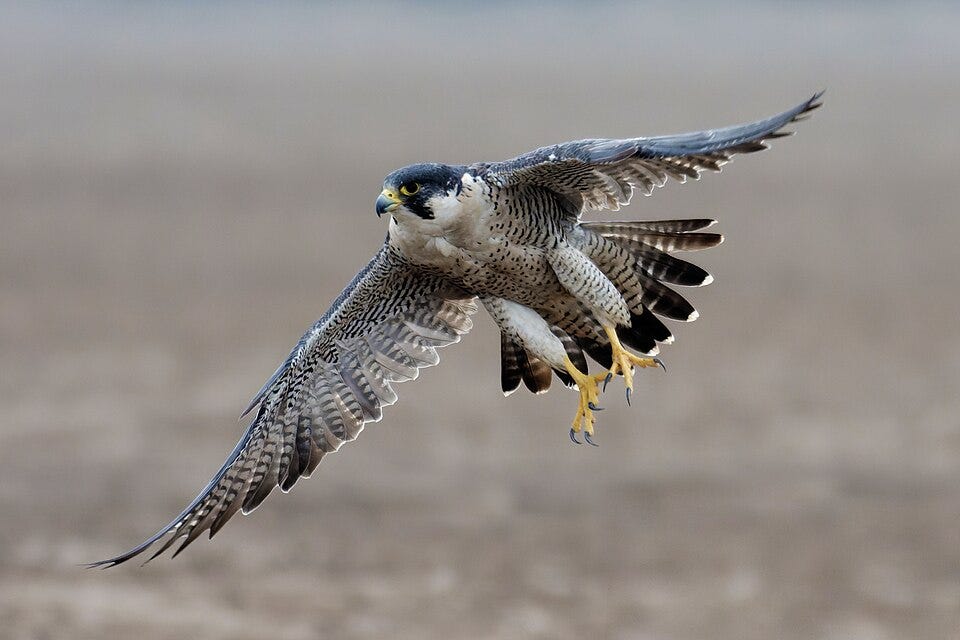
Am I a falcon, a storm, or a great song?
Wonderful questions to explore the world with! I’ll be using these with my kids!
The line that stopped me cold was curiosity breaking the performative certainty of this online era. Everything out here rewards the confident take, the answer, the hot conclusion. A genuine question is almost countercultural now. And you did the bravest possible version of it, ending on Rilke's falcon line instead of resolving it. You practiced the whole essay in its last sentence. Growth over conviction is the harder road because conviction feels like arriving and a question feels like admitting you haven't. But the question is the only one of the two that ever takes you anywhere new. I'm keeping this list for when I travel west this fall.