

The 'Left' Wing and the 'Right' Wing
Belong to the same bald eagle, as it gorges on American Coots by the dozen.

And as majestic as bald eagles are, they are indiscriminate opportunists.
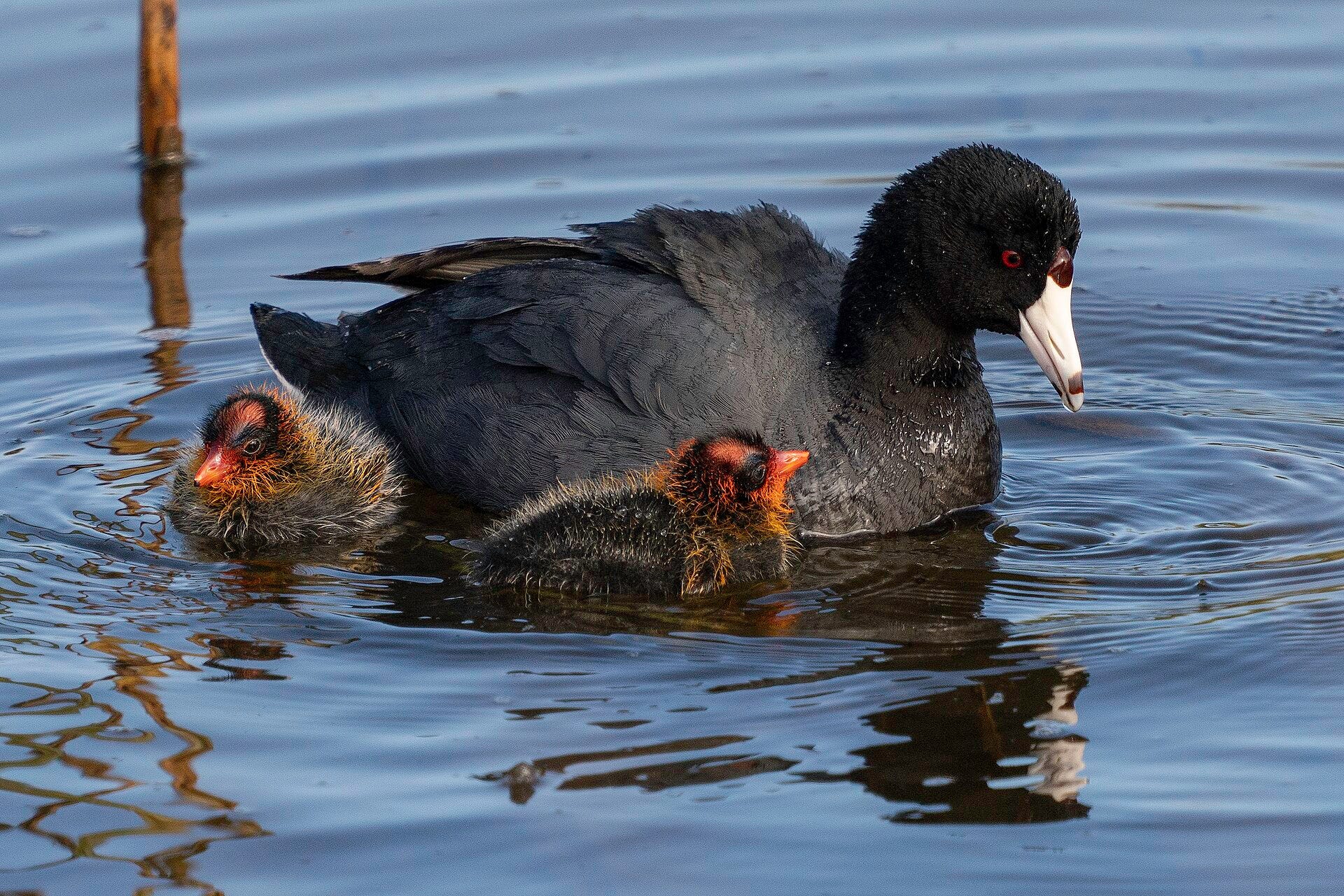

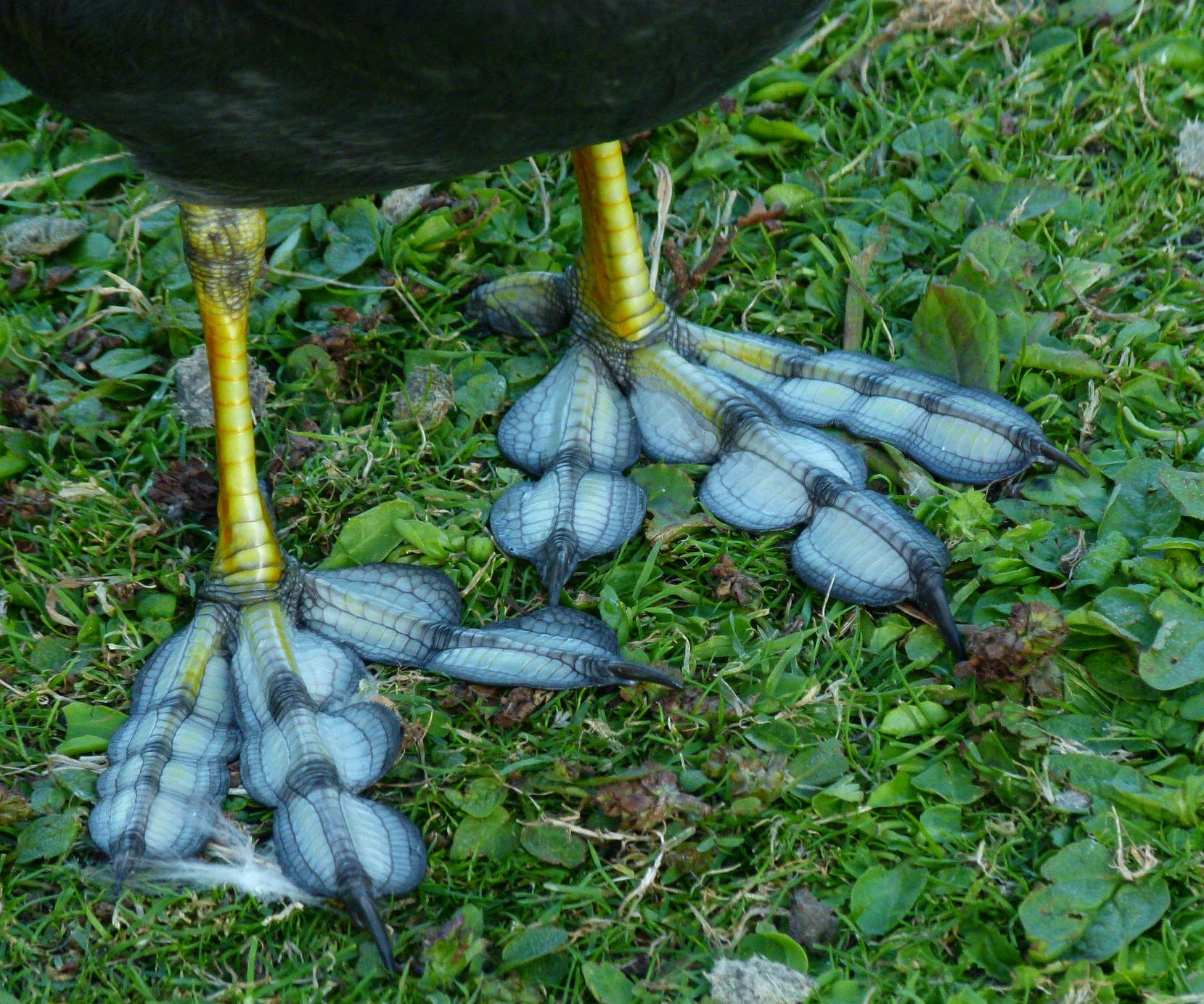
Every October, near my mom’s small Montana cabin, the American coots migrate. A coot is a small black diving bird (Fulica americana), belonging to the Linnean family of rails (Rallidae). It’s a strange bird, black with red-rimmed eyes, reminiscent of wearing a thousand hangovers at once. Its feet are an awkward evolutionary stalemate between a water bird and a land bird. They’re absolutely enormous, lobed, but with extending clawed toes that can somewhat easily navigate land. Hunters call them ‘mud hens’ — attesting that the legal game bird tastes like the mud on its very strange feet, and most generally avoid them as table fare.
I haven’t eaten mud hen myself. I find them unappetizing simply by their strange behavior. They migrate by the thousands through Georgetown Lake, and stragglers are often frozen while they’re still alive into newly forming ice. These are some sad stragglers, and I watched in horror as their own flock mates ate the ice-locked coots alive. Yeah, not only do they supposedly taste like mud, they taste like each other. They are cannibalistic. Givin’ me the ick.
In the timeless words of Cotton Eye Joe, I raise two infinite questions: Where do they come from? Where do they go?
It turns out that many coots raise their chicks in the boreal-adjacent north. They prefer shallower waters with a lot of marsh to them, and Georgetown is the perfect stopping ground. The lake is human-made, which does not mean it was dug out by hand — as I thought for the first thirty years of my life — it was, in fact, dammed. The land that the water now covers was an ancient elk calving ground and hunting point for many Indigenous peoples. Now, it’s a shallow, marshy, trout- and Kokanee salmon-laden recreational point for many. And it offers these thousands of coots exactly what they need on their way from the boreal-adjacent North down to southern wintering grounds in places like Texas, Louisiana, and even Mexico.
Another strange thing about coots? They practice conspecific brood parasitism: females sometimes slip their eggs into other coots’ nests and leave the parenting to somebody else. Well played, sisters.
Yet, the coots are but one half of the spectacle on this migratory stopover. As the birds start moving in late September, our local bald eagle population grows a hundredfold.
Patriotic birds of prey fly in from miles around. I once counted 34 of them in a single tree. They arrive in droves for what I deem The Fattening, and indeed, a single bald eagle can render himself literally flightless by gorging on coot to the point of temporarily grounded rotundity. And this isn’t an abnormal thing for eagles. They can eat enough off of roadkill that they’ll be grounded until they pass enough feces for airborne adventures once more.
The metaphor, my friends, writes itself. Dare I enter this allegorical drama with a sense of American pragmatism?
I do dare.
One of my favorite stories of displeasure in chosen American symbolism comes from Benjamin Franklin and his abhorrence for our newly adopted emblem.
He writes in a 1784 letter to his daughter that proclaims, to paraphrase, the bald eagle sucks and that the turkey is both more American and more respectable.
For my own part I wish the bald eagle had not been chosen as the representative of our country. He is a bird of bad moral character. He does not get his living honestly. You may have seen him perched on some dead tree, where, too lazy to fish for himself, he watches the labour of the fishing hawk; and when that diligent bird has at length taken a fish, and is bearing it to his nest for the support of his mate and young ones, the bald eagle pursues him, and takes it from him. With all this injustice, he is never in good case, but like those among men who live by sharping and robbing he is generally poor and often very lousy.
Besides he is a rank coward: the little king bird not bigger than a sparrow attacks him boldly and drives him out of the district. He is therefore by no means a proper emblem for the brave and honest Cincinnati of America, who have driven all the king birds from our country, though exactly fit for that order of knights which the French call Chevaliers d’Industrie. I am on this account not displeased that the figure is not known as a bald eagle, but looks more like a turkey.
This last part is easy to misunderstand in today’s manner of speaking. He’s making a haute joke out of the whole thing, which translates to the following:
Cowardly eagles get chased off regularly by tiny birds, and god forbid they use such an image for the brave officers of the Continental Army, who did, in fact, chase the King’s men out of the United States. Their nepo-baby descendants, who get to inherit the prestige without doing any of the fighting? That’s another story. Anyway, their eagle logo looks more like a turkey, and that serves them right. Fools.
Frank the Tank is roasting the absolute bejeezus out of these folks. And he speaks to what I see every year at Georgetown.
The biological behavior is called kleptoparasitism, and it essentially means that an eagle is the lunchroom bully stealing everyone’s sandwiches. Watch the coot migration and you’ll catch eagles absolutely destroying each other to save their own caloric expenditure regardless of the easy coot abundance. They often steal from the hapless brown-feathered juveniles to gorge themselves. Fights in the air happen regularly, and I know multiple people who have had their windshields cracked by, yes, coots falling out of the sky. The lake becomes a literal war zone of half-eaten rails. Walk beneath the eagle roosts and you’ll find layers of feathers and lobed feet, all by their lonesome, chawed until chawed no more.
Anyway, let’s hear more about this turkey from Ben-jammin.
For in truth, the turkey is in comparison a much more respectable bird, and withal a true original native of America. Eagles have been found in all countries, but the turkey was peculiar to ours, the first of the species seen in Europe being brought to France by the Jesuits from Canada, and served up at the wedding table of Charles the ninth. He is besides, (though a little vain and silly tis true, but not the worse emblem for that) a bird of courage, and would not hesitate to attack a grenadier of the British guards who should presume to invade his farm yard with a red coat on.
He’s right. The turkey, unlike the generic eagle, is American through and through. Silly and vain, and yes, territorial. (Though, if we’re splitting hairs, a bald eagle is actually North American. I digress.) As a child, my friend’s 4-H tom turkeys regularly chased me over their barnyard fence if I wasn’t careful. And as an adult, I’ve hunted turkeys a few times and had a single success predicated on an expert hunting partner’s knowledge of these squirrely and social large birds. Up close, they are stunning individuals, with iridescent coloring of wildly vibrant blues, deep forest greens, and amber sienna browns baked into blacks and stark whites.
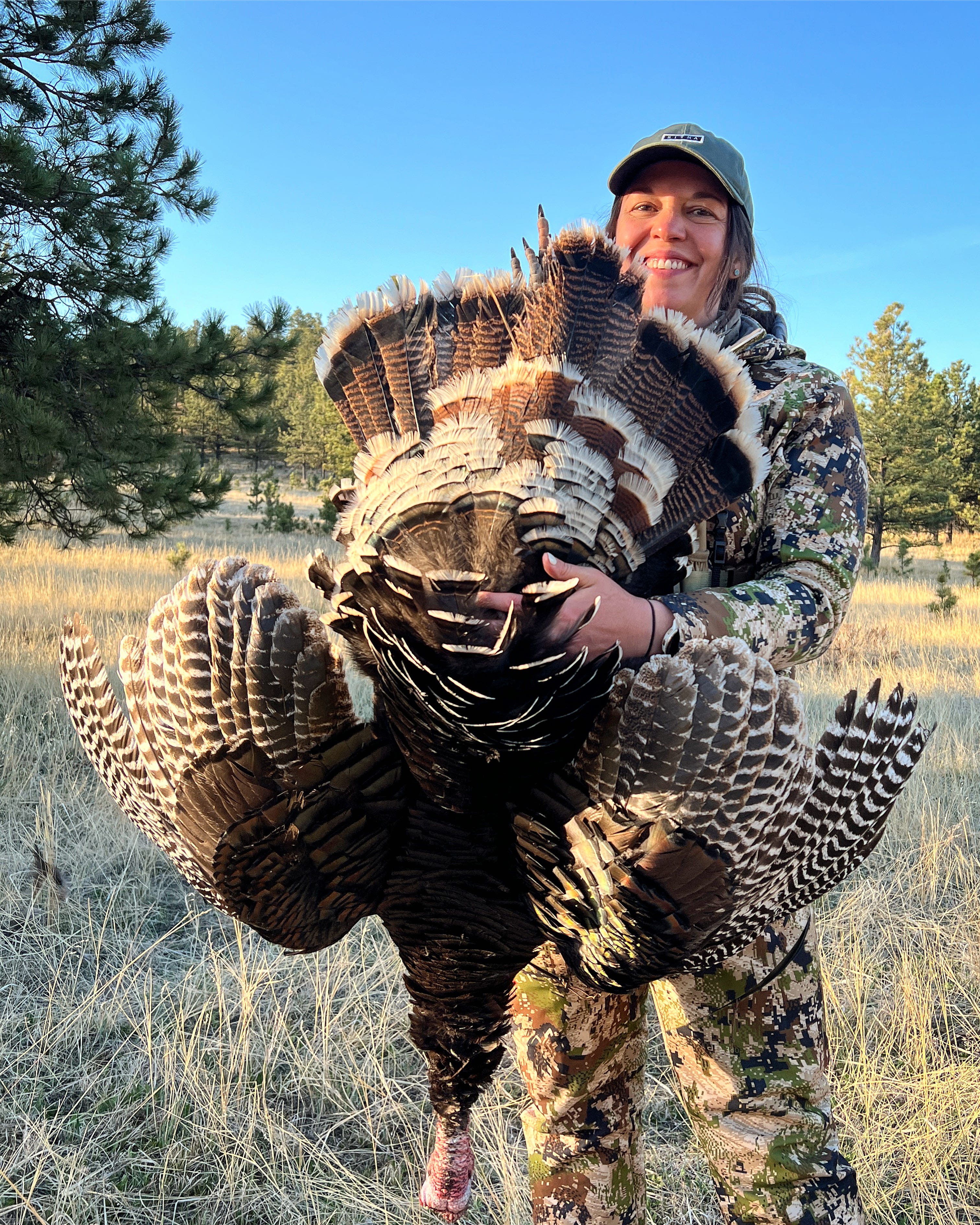
Turkeys are also both gregarious and collaborative in a number of ways. Yes, the males do fight come spring strut, but the species’ overall behavior reminds me of how wild horses choose to live. Young males often make up their own ‘bachelor’ groups by age class, while groups of females raise their poults adjacent to others, often forming large flocks of turkeys with varying ages on the female side.
Older male turkeys — toms are older, jakes are younger — often engage in what’s called male coalition courtship. These well-dressed gentlemen work together to court the hens, though only the dominant male ends up being the father of her children. Interestingly, the males that do this are often related, meaning that the collaboration genetically benefits their bloodline, regardless of which male does the reproducing. In scientific terms, we might call this kin selection or inclusive fitness.
All this to say, I’m annoyed with everything political at this very moment, everything except birds.
Birds are not moral or immoral creatures. I can be horrified by their cannibalistic and parasitic behavior while also recognizing that they’re operating under a natural order that humanity still belongs to. It is not my duty to assign judgment to them for efficiently filling their daily caloric needs weighed against the extreme expenditures required of bird life. A bald eagle nabbing a fish from an osprey is an adaptation, not a theft.
I’ve lived in or adjacent to rural America for much of my life. Out here, the need to be a communal creature often dictates that I read people as people first, rather than a caricature of what I assume them to be. My assumptions are often subverted, anyway, and I have learned that peaceful disagreement is actually what happens out here in the sticks far more than the opposing facets of media want us to believe.
Where I find myself perturbed is when I’m within a bubble, where the assumption is the norm rather than the question. The people who speak ill of the other side are often the ones who have remarkably few human interactions with the opposition, and who haven’t taken the time to attempt to understand it from differing moral frameworks. To me, that’s a failure that belongs to all of us.
Really, I’m upset with both left and right wings enough of the time that I’d rather exist somewhere in the murky and embodied middle, no matter what my voting record might tell someone about me as a data point.
At the end of the day, a functioning bird requires two wings, whether it’s a gregarious turkey, a cannibalistic coot, or a thieving and cowardly bald eagle.
The metaphor, it turns out, has written itself.
Well done.