

This National Monument Cycle Isn't Glamorous
But understanding the history is deeply important to continued advocacy.

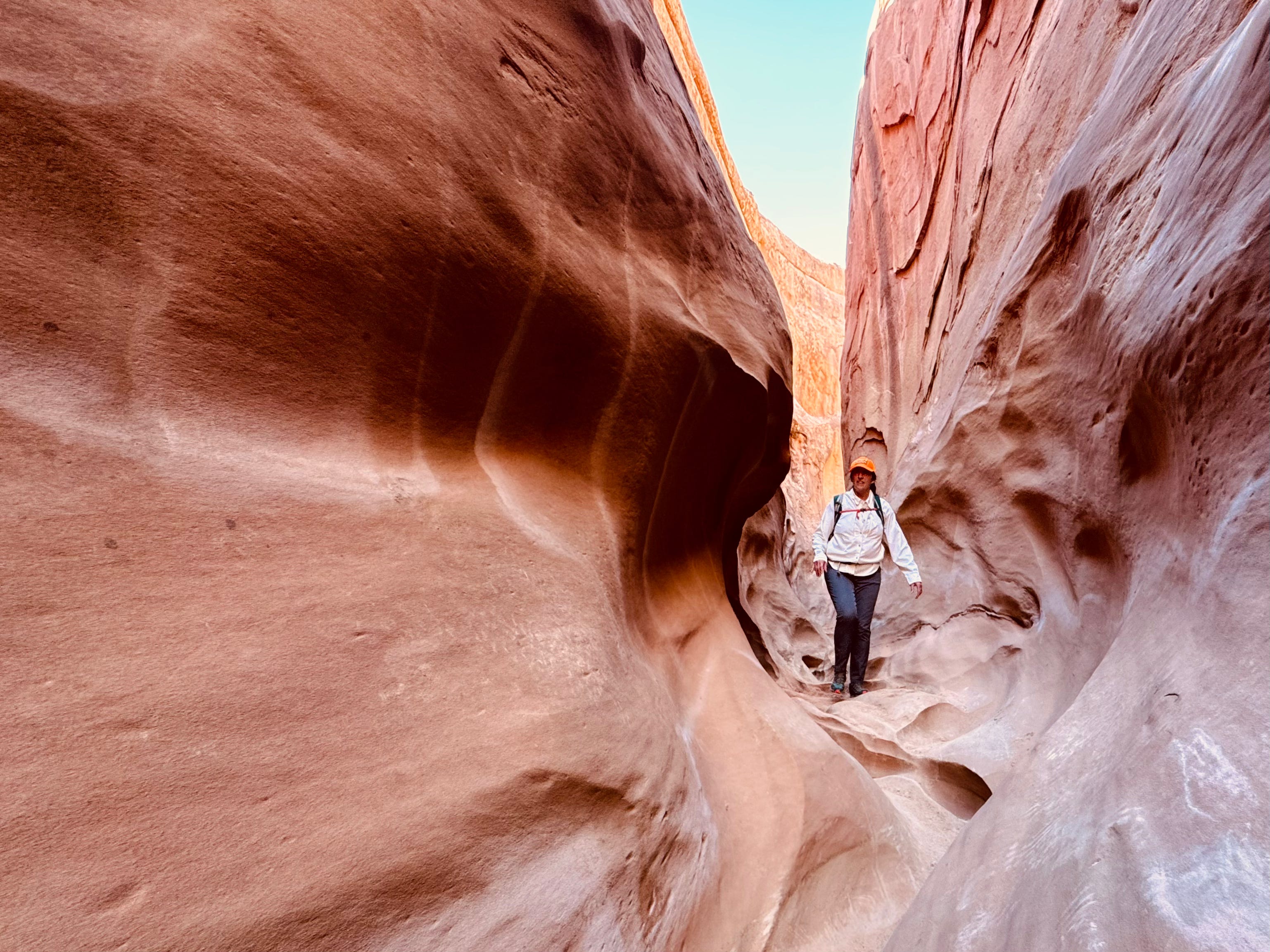
The recent monument news came to me not in headlines or papers but via the video-led devastation of many on social media. It’s a strange way to get the news.
I’m sad that this is the norm for us now.
In previous eras, trained journalists pulled the emotion out of the news. The “I” was disengaged, and the facts were centered — no matter what said journalist thought of the matter. The purpose is not to pull the humanity out of what’s happening; it’s to place the reader in a point of critical thinking rather than a psychological and emotional jolt. ‘Twas the anti-social media in that way.
We are in what I might call a modern era of accidental muckrakers. On an individual level, I get it. There is no training prior to being handed a TikTok or Instagram account. There is only the algorithm and a front-facing camera. And the algorithm loves a hot take. It’s thrilling to post an emotional video and have hundreds of thousands watch it. It feels like action. It feels like some sort of tension pushes against the powers that be in that moment. Rarely is that true.
It is simply less thrilling to play the long game and pay attention to the patterns.
But alas, this is why I’m here. I’m here to remind you of the small things, the historical facts, and, most importantly, the patterns. There are intentional actions that matter more than online outrage, and we must repositioning our voices in order to be heard. I want to note that you don’t necessarily have to take one away to engage the other. You can have your thousands of likes and eat them too. But, knowledge helps.
Time to kill the thrill with facts. Let’s get into it.
Understanding the Monument Cycle
If it feels like Bears Ears and Grand Staircase–Escalante keep changing, that’s because they do. But the broader pattern is more than 100 years old. And the key here is to remember the following:
The boundaries of national monuments largely depend on which administration is in office.
1906: The Beginning of the Cycle
Congress passed the Antiquities Act in 1906 to allow presidents to quickly protect important cultural, historical, and scientific places on public land. It should be noted that the Antiquities Act was an unremarkable thing at the time, and there was little contention over it. Theodore Roosevelt immediately used it to create national monuments, including the Grand Canyon before it became a national park. That was a little more contentious.
From the beginning, people argued over how much land should be protected. Don’t think Roosevelt’s ideas-turned-actions were celebrated, because they certainly weren’t. The Sen. Mike Lee of that era was Sen. Weldon B. Heyburn. But this guy was also against Confederate monuments. And Theodore Roosevelt was a purveyor of eugenics. So let’s not paint this as good vs. evil.
I digress.
Early 1900s: Small Boundary Shifts, No Court Challenge
Between 1909 and 1963, presidents reduced the boundaries of national monuments about 18 times. Most were relatively small adjustments based on new surveys or changing understanding of what needed protection.
The largest of these early reductions occurred in 1915, when President Woodrow Wilson removed nearly 300,000 acres from Mount Olympus National Monument. Even so, the monument remained protected and later became Olympic National Park.
One important difference from today is that there was no immediate court challenge. Wilson's reduction was accepted as a presidential action, and its legality was never tested. That early precedent is one reason the legal question remains unresolved, and has been thus for over a century.
1963–2017: Expansion Becomes Bipartisan (Mostly)
For more than 50 years, no president reduced a national monument. Instead, both Republican and Democratic administrations used the Antiquities Act to protect increasingly large landscapes—not just archaeological sites, but entire ecosystems, fossil beds, wildlife habitat, and Indigenous cultural landscapes.
Please note that none of these changes happened without outcry and pushback. And this is not an exhaustive list.
President Jimmy Carter (1978): Created 17 national monuments in Alaska, protecting more than 56 million acres that later became many of Alaska’s national parks and preserves.
President Bill Clinton (1996): Established Grand Staircase–Escalante National Monument to protect nearly 1.9 million acres of canyons, fossil beds, and desert ecosystems.
President George W. Bush (2006–2009): Designated several of the world’s largest marine national monuments, including Papahānaumokuākea in the Pacific Ocean, recognizing that entire ocean ecosystems deserved protection.
President Barack Obama (2016): Created Bears Ears National Monument after years of advocacy by a coalition of five Tribal Nations, protecting a landscape valued for its archaeological sites, wildlife, sacred places, and living cultural traditions. Expanded Papahānaumokuākea to more than four times its original size, reinforcing the modern trend of using the Antiquities Act to protect large, interconnected ecosystems.
President Joe Biden (2021–2024): Restored Bears Ears and Grand Staircase–Escalante and created or expanded monuments such as Camp Hale–Continental Divide in Colorado and Baaj Nwaavjo I’tah Kukveni–Ancestral Footprints of the Grand Canyon in Arizona.
2017–Today: The Pendulum Returns
The modern cycle began with Bears Ears and Grand Staircase–Escalante.
2016: President Obama created Bears Ears.
2017: President Trump dramatically reduced Bears Ears and Grand Staircase–Escalante.
2021: President Biden restored both monuments.
2026: President Trump reduced them again, this time even more substantially.
Yes, this is an annoying pattern.
It’s Not the End of the World…or These Monuments
As I see it at this moment, three outcomes are possible:
Another political shift. A future president could restore the monuments using the Antiquities Act…again. I see this as being the most likely scenario.
A Supreme Court ruling. The Court may finally decide whether presidents have the authority to significantly shrink monuments after they are created. With the way the Court is situated at this particular moment, I’m curious at what they’d decided.
Congress acts. Congress could rewrite the Antiquities Act or permanently settle the boundaries, though that has proven politically difficult. Think of this as a 1% chance. Yay politics.
What’s Unique About Trump’s Recent Changes: They’re Bigger
What’s different today isn’t that the debate exists — it’s the scale of the changes.
The current reductions are among the largest in the history of the Antiquities Act, and they may ultimately force the Supreme Court to answer a question that has remained unresolved for more than a century.
This also blatantly ignores the will of the Indigenous peoples of this land. If you want to follow this in a meaningful way, I recommend supporting Len Necefer’s Substack. He speaks to this a million times better than I ever could.
What Can You Do? Be Prepared to Stay the Course
At the most recent public lands rally, I was talking with someone who has been in public lands advocacy for a long time. I asked if the cycle ever got tiring. This was now my third round of advocating in person to stop the sale of public lands, and I had the understanding that I was in it for the long haul.
“It’s just a part of the process,” they told me. “It’s also the knife’s edge that keeps public land advocacy groups funded.”
This is the part that we forget — that it takes tension to create tension. There is no tug-of-war without the opposition. It reminds me of the hilarious fact that a liberal government is better for gun and ammunition sales than a conservative government ever will be. Fear drives action. But fear over time can also cause burnout.
I've often wondered how public lands advocates could become more proactive. But after tracing the history back to 1906, I'm not sure this story exists without opposition. Conservationists need challengers just as challengers need conservationists.
I leave you with this, in the most unhinged example of conservationists vs. the Mike Lees of the world.
Sometimes, I think we need to thank the opposite side. They remind us of what we have to lose.
And Please Don’t Forget to Actually Write Your Representatives
And call them. And comment on their social media before you make that post. And bother the crap out of them.
It’s the one thing that makes a data-driven difference.
Really, history is made by the people who keep showing up after everyone else has moved on to the next outrage. It’s made by the people that get out of the app and build a pattern of communication with their reps.
This, my friends, is the long game of public lands advocacy. Keep showing up. Then, settle in. We’re not here for ourselves, but for the seven generations down the line, who will hopefully get to experience Grand Staircase like I’ve been able to experience it, and then pass it on to their children.
I needed this refreshing not sensational reminder today as my local Republican rep posted more nonsense why he chose to not renew our Wisconsin state public land fund. Even after 90% of state residents polled were in favor of it. 🫠